


Peak Sun Hours (HSP): easy explanation for your solar installation
Have you seen that your area has “4.5 HSP” and don’t know what it means? Peak Sun Hours (HSP) indicate how much solar energy can be harnessed at a site each day. Imagine each HSP as hours of “strong” sun, as if the sun shines at maximum (1000 W per square meter) for that many hours.
For example, if your area has 4 HSP and you install 2 kWp of panels, you could generate:
2 × 4 × 0.85 ≈ 6.8 kWh/day (considering small losses).
Why are HSP important?
- They help you calculate the daily energy your solar panels can produce.
- They help choose the correct number of panels: you won’t fall short or have excess.
- They are key to knowing what batteries you need in off-grid installations.
- They allow estimating how many hours a solar pump will run pumping water.
Simple formula to calculate your production
Daily production (kWh) ≈ Panel power (kWp) × HSP × 0.8–0.85
The factor 0.8–0.85 accounts for losses due to heat, cables, inverters, or dirt on the panels.
Practical example: off-grid house with batteries
Suppose your house needs 5 kWh per day and you are in an area with HSP = 4.2.
- Panels: 5 ÷ (4.2 × 0.8) ≈ 1.5 kWp. It is recommended to install between 1.8 and 2.2 kWp to have margin on cloudy days.
- Lithium battery: For a full day, with 90% efficiency and 80% depth of discharge, you need approx. 7–10 kWh of battery.
- Inverter: For appliances like microwave and water pump, better one of 3 kW.
Practical example: self-consumption in a home with grid connection
If your home consumes 18 kWh/day and you want to cover 70% with solar (HSP zone = 4.5):
- Target production: 70% of 18 = 12.6 kWh/day.
- Panels: 12.6 ÷ (4.5 × 0.85) ≈ 3.3 kWp. Install between 3.6 and 4.0 kWp to have margin in winter.
- Inverter: From 3 to 4 kW, better if it has two inputs (MPPT) if the roof has multiple slopes or shadows.
Practical example: water pumping
To pump 10 m³ per day to a height of 40 meters (HSP zone = 5):
- The pump manufacturer will tell you the required photovoltaic power depending on the model (for example, 1.6 kWp).
- HSP indicate how many hours per day the pump will run at full power.
- The trick: you usually don’t need a battery, the water tank acts as a reserve.
How to know how many HSP are in your area?
Check tables like this one, adjusted for south-facing roofs and optimal tilt (30°):
| Province | Summer Max | Winter Min | Annual average | Notes |
|---|---|---|---|---|
| Madrid | 7.7 h | 2.4 h | 5.1 h | Inland climate |
| Seville | 7.1 h | 2.8 h | 5.2 h | More sun per year |
| Barcelona | 6.4 h | 2.4 h | 4.5 h | Coastal zone |
Approximate values; may vary with clouds, orientation, or shadows. If your roof faces east/west or is flatter, add 10–20% extra panels.
Key concepts to understand your solar installation
- Round-trip efficiency: Energy output from the battery compared to energy input. Typically lithium ≈ 90–95%.
- DoD (Depth of Discharge): Percentage of battery capacity you can use without shortening its life. Lithium ≈ 80–90%, lead ≈ 50%.
- Optimal orientation and tilt: Maximum performance if your panels face south and are tilted about 30º.
Frequently asked questions
- Can I use only the annual HSP? Yes, for a quick estimate. But to fine-tune, use monthly HSP and design for the worst month (lowest sun).
- Do I need batteries if I have grid power? Not mandatory. If you consume more at midday, you already save. Batteries only increase the percentage of solar use.
- Is the same HSP valid for everything? HSP indicates available solar energy, but useful electricity depends on system losses.
Common mistakes to avoid
- Confusing “sunlight hours” with HSP: They are not the same. HSP are hours when the sun is strongest.
- Not accounting for losses: Always multiply by 0.8–0.85 for realistic calculations.
- Sizing only using summer data: For off-grid systems, calculate using winter data.
- Ignoring orientation or shadows: Shadows and poor orientation can reduce production by up to 30%.
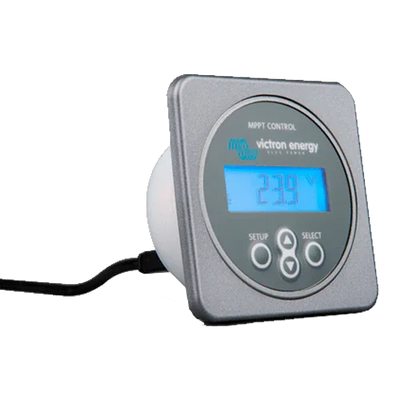
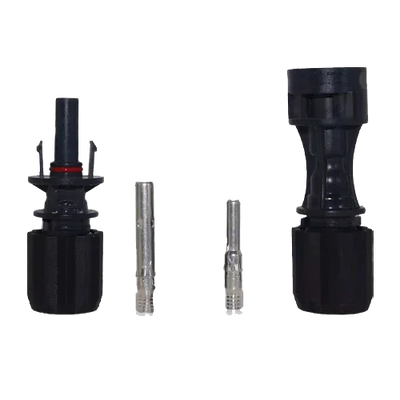
- Not checking cables or the controller: Choose cables and system components according to installed power to avoid risks and losses.
- Not planning maintenance: Dust and dirt can reduce efficiency by up to 20% annually. Perform regular cleaning and inspections.
Basic maintenance for your solar installation
- Clean the panels if you see dust, leaves, or salt buildup.
- Perform an annual inspection of wiring, protections, and production.
- Check for new shadows (trees, antennas, etc.).
- Check the panel temperature, especially in summer.
Additional tips
- For east/west facing roofs, compensate with more panels.
- In very hot climates, leave space to ventilate under the panels.
- Use the data and charts provided by the manufacturer to see how different factors affect your production.
- If you have questions, consult experts or ask for help sizing the system for your specific case.
Would you like help with your calculation?
Tell us where you live, your consumption, and whether you want an off-grid, self-consumption, or pumping system. We calculate your estimated production and suggest the most suitable materials.

