

Hybrid Inverters
Filter and sort


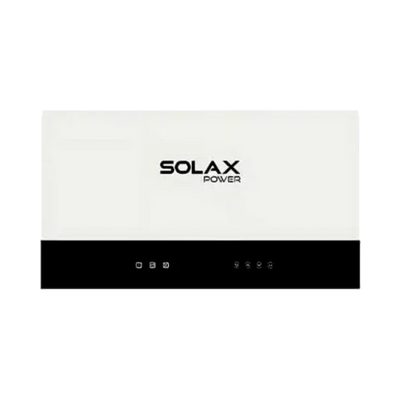


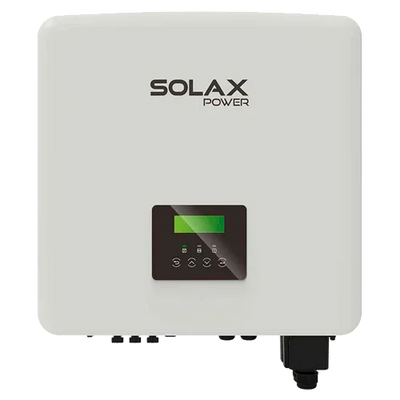


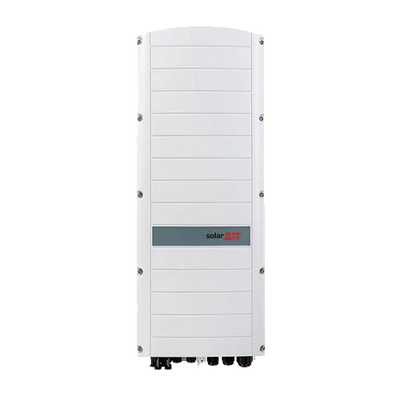

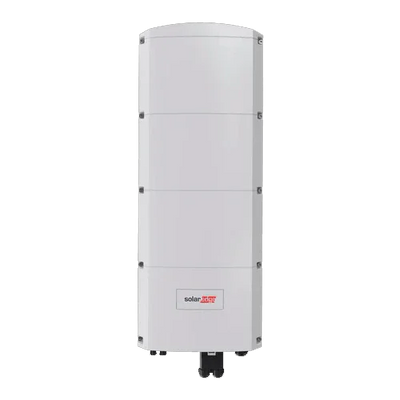


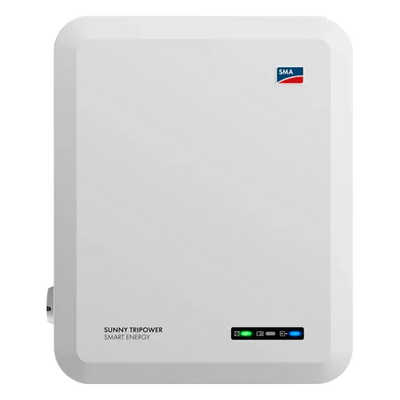


What is a hybrid inverter and what advantages does it offer?
A hybrid inverter integrates DC→AC conversion, MPPT trackers for the panels, and battery management. With it, you can self-consume solar energy, store surplus, and have back-up in case of grid failure, all from a single brain that prioritizes sources (PV, battery, and grid/generator) to maximize savings.
Main advantages
- Savings and control: prioritizes solar and battery, limits feed-in, and shifts consumption to cheaper hours.
- Service continuity: EPS/UPS output to maintain critical loads during outages (depending on model).
- Scalability: expansion of PV strings and battery modules (LV/HV) as needed.
- Monitoring: portal/app to view production, consumption, SOC, and energy flows in real time.
Types and compatibilities
- Single-phase: 230 V for homes with one phase; typical power 3–10 kW.
- Three-phase: 400 V for residences/SMEs with 3 phases; 3–100+ kW.
- Batteries: models for 48 V (LV) and others for high voltage (HV). Check compatibility (CAN/RS485 and supported BMS lists).
How to choose your hybrid inverter
- Power (kW) and peaks: according to simultaneity and inductive loads.
- Number of MPPT and ranges: Voc/Vmp and current per input suitable for your string design.
- Battery system: LV 48 V or HV depending on model; capacity (kWh) and charge/discharge power (kW).
- Functions: backup (EPS), zero feed-in, self-consumption mode, programmable loads, generator support.
- Communications: RS485/CAN with BMS, Wi-Fi/LAN for monitoring, integration with meter/CT.
- Installation: IP rating, wall space, ventilation, and DC/AC protections (SPD, fuses, disconnectors).
General specifications
| Topology | Hybrid (PV + battery + grid/generator) |
| MPPT | 1–10 trackers (depending on power) |
| Battery | 48 V LV or HV (compatibility by model) |
| Output | 230 V single-phase / 400 V three-phase |
| Functions | EPS/UPS, zero feed-in, limitation, time programming |
| Monitoring | App/portal, data logging, alarms |
Best practices for design and installation
- Check Voc at minimum temperature and currents per MPPT before closing strings.
- Select a certified battery by the hybrid manufacturer (compatibility lists).
- Size usable kWh and charge/discharge power according to your habits.
- Install SPD, fuses, and disconnects in DC/AC; ensure proper grounding.
- Configure meter/CT and operating modes (self-consumption, back-up, zero feed-in) during commissioning.
With a hybrid inverter you can make the most of your installation: produce, store, and use energy when it suits you best, without giving up backup. Choose single-phase or three-phase according to your grid and confirm if your project requires 48 V (LV) or HV.
Our Brands


